

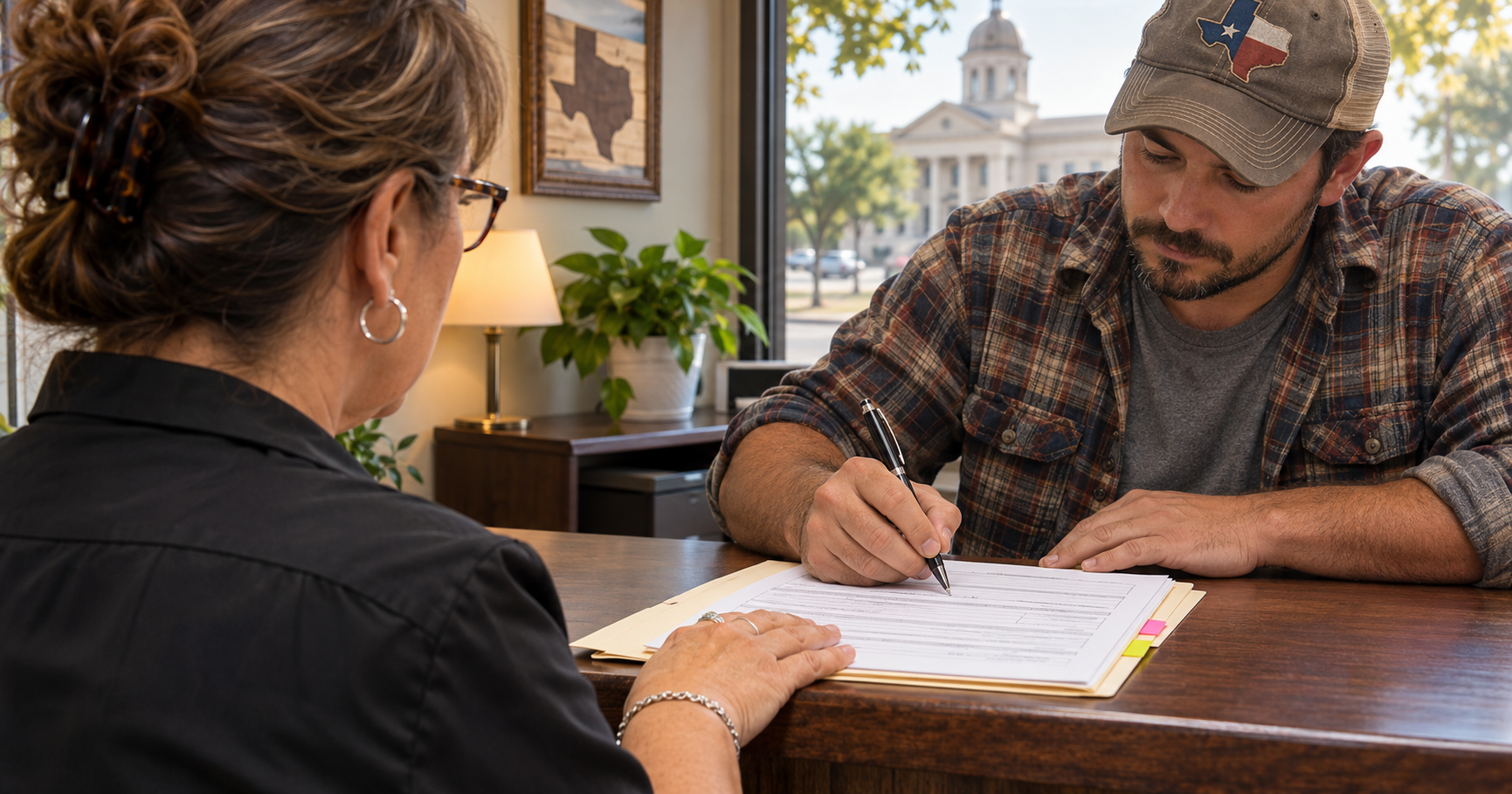

Getting a phone call that someone you love has been arrested can turn an ordinary day upside down. Suddenly, you’re trying to figure out where they’re being held, how much their bail might be, and what you need to do to help them return home. If you’re unfamiliar with the Texas legal system, the process can feel confusing, especially when you’re worried about a family member or friend. For residents of Angleton, TX, and surrounding Brazoria County communities, understanding how bail bonds work can make an already stressful situation more manageable.
A bail bond is a financial guarantee that allows an eligible defendant to be released from custody while their criminal case proceeds, provided the conditions set by the court are satisfied. Instead of paying the entire bail amount directly, families may work with a licensed bail bondsman who arranges a surety bond in exchange for a fee and any required security. However, posting a bond doesn’t eliminate criminal charges or guarantee immediate release.
Here’s what families in Brazoria County should understand about the bail bond process:
-
Bail is determined through the legal process: A magistrate considers the circumstances of the case and applicable Texas law when making bail decisions.
-
Not every defendant qualifies for release: Certain charges, legal restrictions, or court orders may prevent release on bail.
-
A bail bondsman provides a financial guarantee: A licensed bondsman can arrange an eligible surety bond without requiring the family to deposit the entire bail amount with the court.
-
Bond fees are generally nonrefundable: The amount paid to a bail bond company is typically compensation for its services, not a refundable court deposit.
-
Court appearances remain mandatory: Defendants must follow their release conditions and attend required court proceedings.
At Brazoria County Bail Bonds, we’ve helped individuals and families navigate the bail bond process in Angleton and surrounding communities for more than 30 years. We understand that an arrest can leave families with urgent questions, and we’re here to explain the bonding process, review available options, and help customers understand their responsibilities.
What Is a Bail Bond, and How Does It Work in Texas?
A bail bond is a legal and financial commitment that helps secure an eligible defendant’s release from jail while requiring them to appear for future court proceedings. Under the Texas Code of Criminal Procedure, bail serves as security for the defendant’s appearance, and a surety bond allows an authorized bondsman to assume financial responsibility under the bond’s terms.
Understanding Bail vs. a Bail Bond
Although people often use the terms interchangeably, bail and bail bonds aren’t exactly the same thing. Bail refers to the security required for release, while a bail bond is one method of providing that security.
For example, if a court sets bail at $10,000, that figure represents the bond amount established for the case. The defendant may have different options for satisfying the requirement, depending on the court’s decision and applicable law.
Types of Bail Available in Texas
Texas recognizes several arrangements for pretrial release, although availability depends on the defendant’s circumstances and applicable restrictions.
Common options include:
-
Cash bond: The required amount is deposited with the appropriate authority, subject to refund and administrative rules if the bond’s conditions are satisfied.
-
Surety bond: A bail bondsman or another acceptable surety provides the required financial guarantee.
-
Personal bond: An eligible defendant is released based on a written promise to appear and comply with specified conditions, without posting a conventional cash or surety bond.
Not every option is available in every case. Recent changes to Texas bail laws also place additional restrictions on certain defendants and offenses, making individualized legal review important.
Step 1: Find Out Where Your Loved One Is Being Held
The first step after an arrest is confirming where the individual is being held and whether booking has been completed. For arrests involving Angleton or other Brazoria County communities, the person may initially be held by a municipal agency or transferred to the Brazoria County jail system.
Gathering Important Information
Before contacting a bail bondsman, try to collect as much information as possible about the arrest. Having accurate details can help reduce confusion when discussing the person’s situation.
Useful information includes:
-
The individual’s full legal name
-
Date of birth
-
Arresting agency, if known
-
Jail or detention facility
-
Booking number, if available
-
Charges, if known
-
Bond amount, if one has been established
If you don’t have all these details, don’t assume you can’t begin asking questions. You can contact the appropriate detention facility to determine what information is available.
The Brazoria County District Clerk’s Office identifies the county jail contact number as (979) 864-2240. Families can use this as a starting point when trying to confirm whether someone is in county custody.
Understanding the Booking Process
After an arrest, law enforcement personnel generally complete booking procedures that may involve recording identifying information, documenting charges, and processing the individual into custody.
The amount of time required can vary based on facility activity, the circumstances of the arrest, and other administrative requirements. Bail arrangements may not be completed until the applicable legal and booking procedures have progressed sufficiently.
Step 2: Understand How Bail Is Set in Texas
Bail is determined by an authorized magistrate based on Texas law, the circumstances of the case, and relevant public safety considerations. Under Article 17.028 of the Texas Code of Criminal Procedure, an individualized bail decision generally must be made without unnecessary delay and no later than 48 hours after arrest, although that doesn’t guarantee release within 48 hours.
What Factors Influence the Bail Amount?
Texas law requires bail decisions to account for several considerations. These include the nature of the alleged offense, the defendant’s circumstances, appearance in court, and the safety of the community and alleged victim.
For example, a misdemeanor charge may present different considerations from a serious felony allegation. Previous court appearances, criminal history, and other legally relevant circumstances may also affect the decision.
A bail bondsman doesn’t determine the bail amount or override a magistrate’s ruling. Our role begins with helping eligible individuals understand how an authorized bond can be arranged once the applicable requirements are known.
Can Someone Be Denied Bail?
Yes, certain defendants may be denied bail under the Texas Constitution and applicable statutes. Eligibility depends on the charges, legal history, and other circumstances considered through the judicial process.
If bail has been denied or a legal hold prevents release, a bondsman cannot independently change that decision. The defendant or family should consult a criminal defense attorney about available legal options.
Step 3: Contact a Licensed Bail Bondsman in Angleton
Once the bond amount and eligibility are established, families can contact a licensed bail bondsman to discuss arranging a surety bond. Working with an experienced local provider can help clarify the required paperwork, financial obligations, and next steps.
What Does a Bail Bondsman Do?
A bail bondsman provides a surety bond that guarantees the defendant’s appearance in court according to the bond’s terms. In exchange, the customer pays an agreed fee and may need to provide collateral or satisfy other contractual requirements.
For example, a family may choose a surety bond when paying the full cash bail amount would create a substantial financial burden. The bondsman explains the applicable charges and conditions before the agreement is signed.
At Brazoria County Bail Bonds, we assist with bail bonds involving misdemeanor and felony charges, including certain DWI, theft, drug-related, and other criminal cases when bonding is legally available. We work with customers throughout Angleton, Lake Jackson, Clute, Freeport, Pearland, and other Brazoria County communities.
Why Licensing Matters
Bail bond companies operating in Brazoria County are regulated through the county’s Bail Bond Board under Texas Occupations Code Chapter 1704. The board oversees licensing and other aspects of the local bail bond business.
Before signing an agreement, families should confirm that the bondsman is properly authorized and understand the financial terms. This helps ensure that the arrangement is handled through an established legal process.
Step 4: Review Bail Bond Fees and Payment Responsibilities
Bail bond fees represent the cost of obtaining a surety bond through a licensed provider and are generally separate from the full bail amount established by the court. The amount charged depends on the bond agreement, case circumstances, and the provider’s terms.
How Much Does a Bail Bond Cost in Texas?
Bail bond companies commonly charge a percentage of the total bond amount, but Texas doesn’t establish one universal statewide premium rate for every criminal bail bond. The Texas Department of Insurance confirms that criminal court appearance bond rates aren’t regulated under its ordinary insurance rate rules.
As an illustration, a hypothetical 10% fee on a $10,000 bond would equal $1,000. This is only an example, not a guaranteed rate or an advertised fee from our company.
Before proceeding, ask for a written explanation of the premium, any additional charges, and whether collateral or other security is required.
Are Bail Bond Fees Refundable?
A bail bond premium is generally nonrefundable because it compensates the bondsman for arranging the bond and assuming the associated financial risk. This is different from a qualifying cash bond deposit made directly with the court, which may be refundable under applicable rules.
Even if the criminal charges are eventually dismissed, the premium paid to the bail bond company generally isn’t returned. Families should understand this distinction before choosing how to post bail.
What About Collateral?
Depending on the agreement, a bondsman may require collateral to secure the bond obligation. Collateral could involve money or another acceptable form of security, subject to applicable law and contractual terms.
Ask how collateral is handled, what conditions must be satisfied before its release, and what happens if the defendant violates the bond agreement. Never sign documents you don’t understand.
Step 5: Complete the Paperwork and Understand Cosigner Responsibilities
Completing the bail bond paperwork creates legal and financial obligations for the parties who sign the agreement. A cosigner, sometimes called an indemnitor, may agree to help guarantee that the defendant follows the bond’s conditions and may assume financial liability under the contract.
What Information Might Be Required?
The paperwork process may involve verifying identification, contact information, employment details, and other information relevant to the bonding arrangement. A cosigner may also need to provide documentation connected to payment or collateral.
The requirements depend on the bondsman’s procedures and the particular case. We explain the necessary steps so customers can review the documents before making a commitment.
What Does a Cosigner Agree To?
A cosigner’s responsibilities can extend beyond paying the initial bond fee. Depending on the agreement, the cosigner may be financially responsible if the defendant fails to comply with the bond’s conditions.
For example, a missed court appearance could create obligations involving the bond amount, recovery expenses, or other contractually authorized costs. The exact consequences depend on the contract and applicable law.
Before cosigning, make sure you understand the defendant’s obligations, your potential liability, and the circumstances under which your responsibility ends.
Step 6: The Bail Bond Is Submitted for Processing
After the required agreement and payment arrangements are completed, the surety bond can be submitted to the appropriate authority for processing. If the bond is accepted and no other legal holds prevent release, the detention facility can proceed with its release procedures.
How Long Does It Take to Get Out of Jail?
There isn’t one guaranteed release timeline for every Texas jail. Processing time may depend on staffing, booking status, bond verification, facility procedures, and other pending legal matters.
Even when a bond has been accepted, the individual may remain in custody while administrative procedures are completed. A bondsman cannot guarantee that the jail will release someone within a specific number of hours.
For families waiting in Angleton or elsewhere in Brazoria County, understanding that paperwork and physical release are separate stages can help establish realistic expectations.
Can Another Hold Delay Release?
Yes, outstanding warrants, holds from other jurisdictions, or other legal restrictions may prevent release even after a bond has been posted on a particular charge. These circumstances must be addressed through the appropriate legal or detention authorities.
If you’re unsure whether other restrictions apply, ask questions before making financial commitments. Clarifying known holds can help avoid misunderstandings about what posting a particular bond will accomplish.
Step 7: Follow All Court Dates and Release Conditions
After release, the defendant must attend required court proceedings and comply with every condition imposed by the court. Posting bail doesn’t end the criminal case, and failure to follow the applicable requirements can result in serious legal and financial consequences.
What Happens After Someone Is Released?
The defendant may need to attend court appearances, maintain current contact information, and follow specific restrictions established by the magistrate. Depending on the case, additional conditions may involve travel limitations, reporting requirements, or other court-ordered obligations.
For cases proceeding through Brazoria County courts in Angleton, the defendant should carefully review all documents and instructions received upon release. A criminal defense attorney can provide guidance about the underlying case and any uncertainty regarding court obligations.
What Happens If Someone Misses Court?
Missing a required court appearance can lead to a warrant, bond forfeiture proceedings, and additional financial consequences. The surety and cosigner may face liability under the applicable bond agreement and Texas law.
If an unavoidable problem arises before a scheduled court date, the defendant should contact their attorney and the appropriate court promptly. Never assume that informing a family member or bondsman automatically excuses an absence.
When Does a Bail Bond End?
A bail bond’s obligations generally continue until the applicable legal conditions for discharge are met. Depending on the case, this may involve dismissal, acquittal, sentencing, or another qualifying disposition.
The timing and release of collateral depend on the law and the agreement’s terms. Families should ask the bondsman for clarification before assuming that all financial obligations have ended.
What Mistakes Should Families Avoid During the Bail Bond Process?
The most common bail bond mistakes involve misunderstanding fees, signing agreements without reviewing them, assuming release is guaranteed, or overlooking court obligations. Families in Angleton can reduce confusion by gathering accurate information and asking clear questions before committing financially.
Several practical precautions can help:
-
Confirm the correct bond amount: Make sure the figure you’re discussing applies to the relevant charges and hasn’t changed.
-
Understand the full financial agreement: Review the premium, additional charges, collateral requirements, and potential cosigner liability.
-
Avoid making assumptions about release: Other legal holds or administrative procedures may affect when someone leaves custody.
-
Keep important documents: Save copies of the bond agreement, receipts, release instructions, and court notices.
-
Treat every court date seriously: Missing an appearance can create consequences beyond the original criminal charge.
An arrest can be emotionally difficult for everyone involved, particularly when families are making unfamiliar decisions under pressure. Taking time to understand the paperwork can help you make a more informed choice.
Frequently Asked Questions About Bail Bonds in Angleton, TX
How do bail bonds work in Texas?
A bail bond allows an eligible defendant to obtain pretrial release by providing a financial guarantee of future court appearances. When using a licensed bondsman, the customer pays a fee and agrees to the applicable contractual conditions, while the bondsman provides the authorized surety bond.
How much does a bail bond cost in Brazoria County?
Bail bond costs depend on the amount set by the court and the terms offered by the licensed bondsman. Because there isn’t one universal statewide premium rate, families should request a written explanation of fees, collateral requirements, and any additional financial obligations before signing.
Can someone get out of jail without paying a bail bondsman?
Yes, some eligible defendants may be released through a personal bond or another legally available arrangement, while others may post an accepted cash bond directly. The available options depend on the magistrate’s decision, the charges, and applicable Texas bail laws.
How long does the bail bond process take in Angleton, TX?
The timeline depends on booking, bail determination, paperwork, bond acceptance, and the detention facility’s release procedures. Some cases move more quickly than others, but no bondsman can guarantee a specific release time, especially when other legal holds or restrictions are involved.
Does a cosigner have to pay the entire bail amount?
Not necessarily, but a cosigner may accept liability for substantial financial obligations under the bail bond agreement. The responsibilities can extend beyond the initial fee, particularly if the defendant fails to appear in court or violates conditions that trigger contractual liability.
Can you get your bail bond money back after the case ends?
The premium paid to a bail bond company is generally nonrefundable because it’s payment for the bonding service. However, eligible cash deposits made directly with the court may be refundable under applicable law, and collateral held by a bondsman is handled according to the agreement and legal requirements.
What happens if someone misses court in Brazoria County?
Missing court can result in a warrant, bond forfeiture proceedings, and possible financial liability for the defendant and surety. The defendant should contact their attorney and the court promptly if an appearance is missed, rather than assuming the issue will resolve itself.
Can Brazoria County Bail Bonds help with misdemeanor and felony cases?
Yes, we assist customers with eligible misdemeanor and felony bail bond matters, including certain DWI, theft, drug-related, and other charges. The ability to arrange a bond depends on the applicable bail decision, legal restrictions, and the circumstances of the individual case.
Get Clear Answers About Bail Bonds in Brazoria County
When someone you care about has been arrested, understanding the next steps can make a difficult situation feel less overwhelming. From confirming where the person is being held to reviewing the bond amount, paperwork, and court responsibilities, every stage of the process deserves careful attention. Knowing how bail bonds work in Texas can help you avoid misunderstandings, ask more informed questions, and understand the financial commitments involved before making a decision. Most importantly, it helps you approach the situation with a clearer picture of what to expect.
At Brazoria County Bail Bonds, we’ve been helping families throughout Angleton, Alvin, Lake Jackson, Freeport, Pearland, and surrounding Brazoria County communities for more than three decades. We understand that questions about bail often come during stressful circumstances, and our goal is to help customers understand the bonding process and available options. Whether you’re trying to determine what information is needed or have questions about cosigner responsibilities, we’re here to help you take the next appropriate step.
Need Help Understanding the Bail Bond Process in Angleton?
Get straightforward information about bail bond requirements, paperwork, and financial responsibilities from an experienced local provider. Contact Brazoria County Bail Bonds today to discuss your situation and learn about available bonding options